




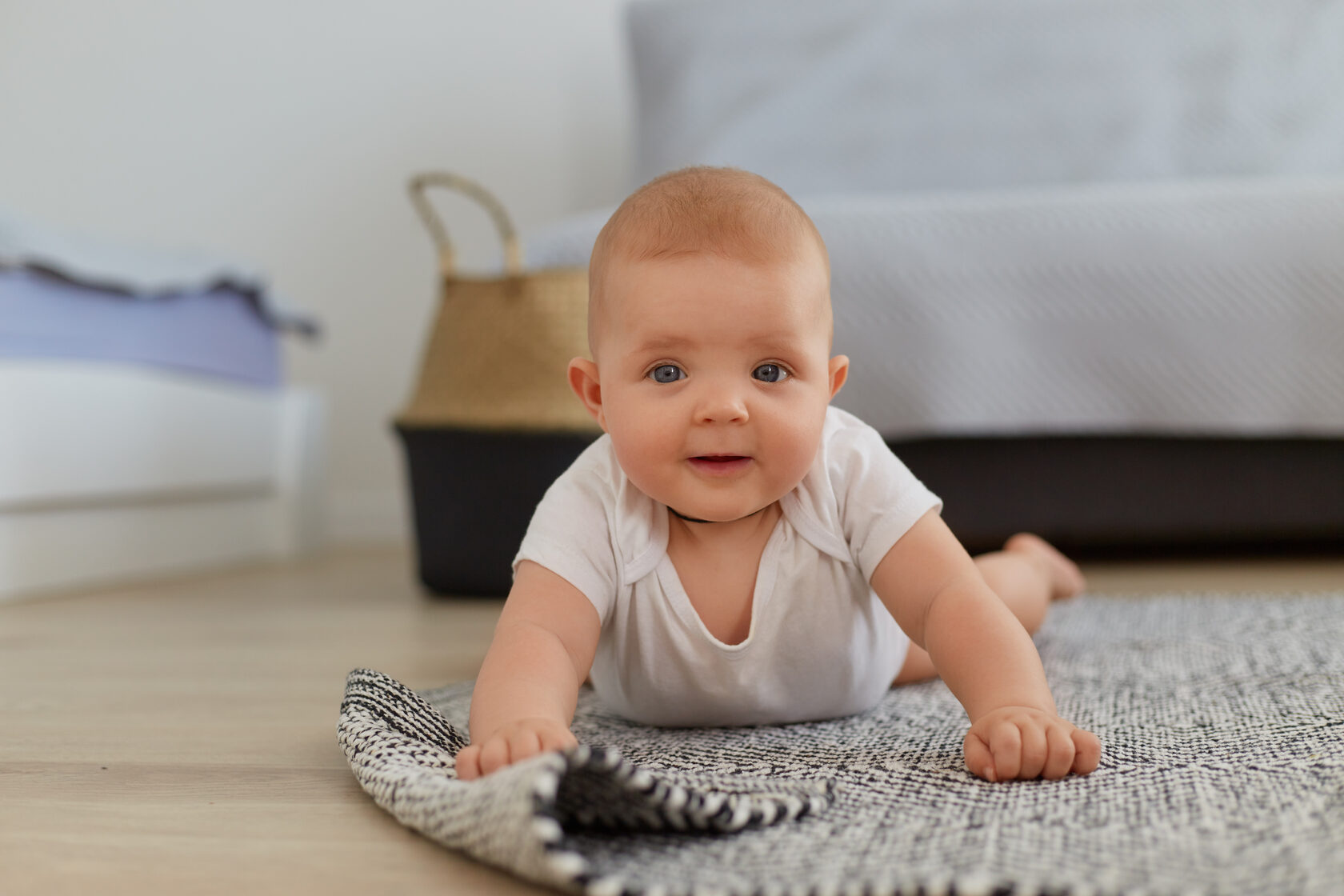
Babies don’t move forward in tidy steps. They may pause for a while, surprise you with something brand new, or even circle back to an old skill before moving ahead. By the halfway point of the first year, skills can tumble in one after another, leaving you scrambling to keep up.
What your little one could do at 5 months may feel like a world apart from the new skills that show up at 6 months, and by 7 months, yet another layer of independence is unfolding. Six months is when many babies start to feel different — propping themselves up to sit, laughing on purpose, reaching with intent, and maybe even sampling their first spoonful of food.
But every baby takes their own route through development. Some arrive at certain abilities a little earlier, others a little later — all of it within the wide, healthy range of growth. Here we’ll look at what usually shows up around 5, 6, and 7 months — from movement to babbles to social play — plus simple ways to encourage your baby as they grow.
Every little victory: why baby milestones truly matter
It’s tempting to treat milestones like a checklist, but really they’re just signposts showing the different routes babies take as they grow. They help parents and pediatricians see how a child’s skills are unfolding across movement, language, and social interaction.
Watching milestones unfold gives clues about how the brain and body team up — whether it’s the muscle power behind a roll or the curiosity that pushes a baby to babble.
Milestones don’t run on a stopwatch. Some babies are sitting tall by six months, others take a little longer — and both are absolutely fine. What matters is noticing the steady changes: the new ways your baby reaches for you, plays with the world, or responds with delight.
From playful grabs to first sounds: 5 month baby milestones
By five months, those newborn reflexes give way to clumsy swats and wiggly reaches — the first signs your baby is trying things on purpose. It can feel like your baby’s first real attempt at doing things on their own. A sudden roll onto their back, or that surprisingly accurate grab for a toy, can catch you off guard.
Growing bodies, first words, and social sparks at five months
At five months, your baby starts to feel sturdier in your arms — their head steadier, their body less floppy, their movements more intentional. Head control is usually solid, making supported sitting possible, and rolling often becomes a favorite skill — sometimes just tummy to back, sometimes both ways.
All that kicking and stretching is quiet training — the groundwork for sitting on their own and, soon enough, crawling across the floor. Their curiosity is hard to miss — toys get grabbed, chewed, dropped, and picked up again in what looks like endless trial-and-error play.
This is also when their voice takes off. You’ll hear strings of coos, almost like little songs, and bursts of giggles when you make a silly sound or pull a face. By six months, many babies pause when they hear their name — and often answer back with a stream of babbles, like they’re trying to chat with you.
Smiles now feel deliberate — saved for you, a sibling, or another familiar face. They may reach out for comfort or join in play more deliberately — showing both connection and the first flickers of independence.
Six-months milestones in: rolling, sitting, and so much more
By six months, daily life picks up pace — your baby rolls, reaches, and stretches for everything within sight, as if the whole room just became theirs to explore. At this age, many babies are happiest when sitting with a bit of support, grabbing at toys that pass by, and even watching you eat with clear curiosity.
Many little ones can roll from tummy to back and back again, kick and bounce when held on their feet, and try to balance in a wobbly sit with your help nearby. Toys get swapped between hands, banged like tiny drums, or dropped over and over just for fun.
Playful moments to share
At this age, babies are more aware of the world — yet still deeply reliant on mom and dad. So how can you turn time together into something both useful and joyful? Through play. Sometimes parents just need to remember what it felt like to be small themselves — unhurried, open to wonder, with every path waiting to be explored.
Laughter comes more often now, squeals can be ear-piercing, and a single grin has a way of lighting up the room. Food becomes fascinating — your spoon, your plate, anything in reach — though milk or formula is still their main meal.
Play begins to feel more like a dialogue — your baby leans toward you, stretches for your hands, and babbles in response, as though they’re practicing their part of the exchange. They lean into your games, reach for you, and babble back as if trying to keep the conversation going.
All those rolls across the floor and squeals of delight are quiet rehearsals for the next big stages — crawling across the room, testing independence, and one day taking those wobbly first steps.
Strong moves: physical and motor skills at 6 months
When it comes to 6-month-old motor skills, your baby is likely showing off new strength and balance every day. Sitting up with support is often a favorite position now, giving them a whole new view of the world. Some babies can even balance briefly without help, though wobbling and toppling are part of the process.
Rolling over has usually become second nature by this stage — both from back to tummy and tummy to back. You may also notice them pressing their hands into the floor, lifting their chest, and sometimes rocking forward and back on hands and knees. That rocking is practice for crawling, though real crawling might still be weeks off.
Many babies also love to “stand” when held under the arms, proudly bearing weight on their legs and bouncing with excitement. The bouncing might look silly, but it’s helping your baby build balance and strength.
Finding their voice: language development at 6 months
By six months, your baby’s voice fills your everyday routines. 6-month-old language development often includes the first real consonant–vowel combinations — those joyful “ba-ba” or “da-da” sounds that come out over and over and more often than in 5 months. This stage of babbling may sound like random noise, but it’s actually the first practice run for real words.
You may also notice your baby pausing or looking over when their name is called. They’re beginning to understand that sounds carry meaning, and your voice is their favorite signal. Conversation takes on a rhythm too — when you speak, they may respond with a babble or squeal, as if you’re taking turns.
These little sound experiments become the first attempt at back-and-forth. The more you respond — by smiling, imitating, or chatting back — the stronger your baby’s language pathways become.
Tiny bites, big steps: nutrition at 6 months
This is often when babies start showing real curiosity about food — sitting steadier, eyeing your plate, and even lunging for a taste. It’s less about meals and more about the thrill of trying something new.
At this stage, those first spoonfuls are more about discovery than dinner. Iron-rich foods like soft puréed meat, lentils, or baby cereals work well, along with mashed fruits and vegetables. Some families start with purées, others jump into soft finger foods. Either way is fine — the key is to keep it safe and stay close by as your baby experiments.
Milk is still their main meal — solids are just practice. Early bites are about learning how to chew and swallow while breastmilk or formula keeps them full.
Half a year of discovery — 6-month baby social and cognitive milestones
You notice it in how they play, how they react, and how closely they study familiar faces. 6-month-old cognitive milestones include the beginnings of memory and problem-solving — skills that show up in small but meaningful ways.
One big shift is object permanence — the idea that things still exist when they’re out of sight. Suddenly, peek-a-boo becomes the funniest game in the world. That squeal when you reappear isn’t just joy — it’s proof they know you come back.
Playful moments to share
Socially, six-month-olds start showing favorites. They light up for parents or siblings but may grow shy or clingy with strangers. This early stranger anxiety is a healthy step in learning who’s safe and familiar.
When your baby hits six months, movement is only part of the story — they’re beginning to start to understand what it means when someone leaves and comes back, laying the foundation for deeper bonds and playful learning.
7-month baby milestones – building strength, voice, and connection
By seven months, the changes come fast. One week it’s new sounds, the next it’s a new move. Babies at this age often mix it all together — louder babbles, more movement, and a clearer sense of who they are.
7-month baby milestones build on everything that came before, they stretch for toys, call out with louder babbles, or hold on tightly when they need comfort. Physically, babies are becoming sturdier. At this age, many can sit on their own, leaving their hands free to grab toys, bang blocks, or simply explore.
Some babies start rocking on all fours, getting ready to crawl, while others scoot or roll across the floor. You may also spot the early pincer grasp — that wobbly pinch between thumb and finger — the first step toward self-feeding and picking up tiny objects.
In terms of communication, 7-month-old language development comes alive with strings of sounds. They’re starting to notice not only the words but also the tone — laughing at your playful voice or calming down when you speak softly.
A playful voice might set off laughter, while a calm hush can soothe. You may see the first gestures: arms lifted to be picked up, an unsteady clap, or a small wave that feels like their way of talking. Emotionally, seven-month-olds often cling tighter in new settings but also light up more for the people they love.
They may hold onto you in a crowd yet grin wider when you smile back. Your baby may seek you out across the room, brighten when you smile, or try to mimic your expressions as if practicing the art of connection.
How parents can support development at 5–7 months
Every new skill is nudged along by the way you join in — the games you play, the way you answer their signals, and the safe space you leave for them to try. Parents often ask how to help at this stage — but it usually comes down to the ordinary daily moments.
- Keep offering tummy time — even if your baby can already roll or sit, those minutes on the floor still strengthen their muscles and get them ready to crawl.
- Set out a few safe toys — soft blocks, rattles, or baby toys for 6 months that are easy to grab and chew. The banging and chewing may look like chaos, but that’s how babies practice coordination.
- Keep the chatter going — talk, sing, echo their babbles. That back-and-forth teaches them that voices matter.
- Bring out a board book — bright pictures and simple rhymes let your baby hear the rhythm of language while curled up close with you.
- At mealtimes, encourage self-feeding — let them grab soft foods or finger-sized pieces while you keep a close eye. Right now it’s as much about exploring textures.
It’s never about perfect routines or ticking off milestones on cue. What truly shapes these months is the way you show up — the smiles you return, the encouragement you give, and the small freedoms you allow for trial and error.
Each stretch, babble, and wobble is practice, and when you notice and respond, those moments become building blocks. What they need most is simple — your patience, warmth, and the space to grow in their own rhythm.