




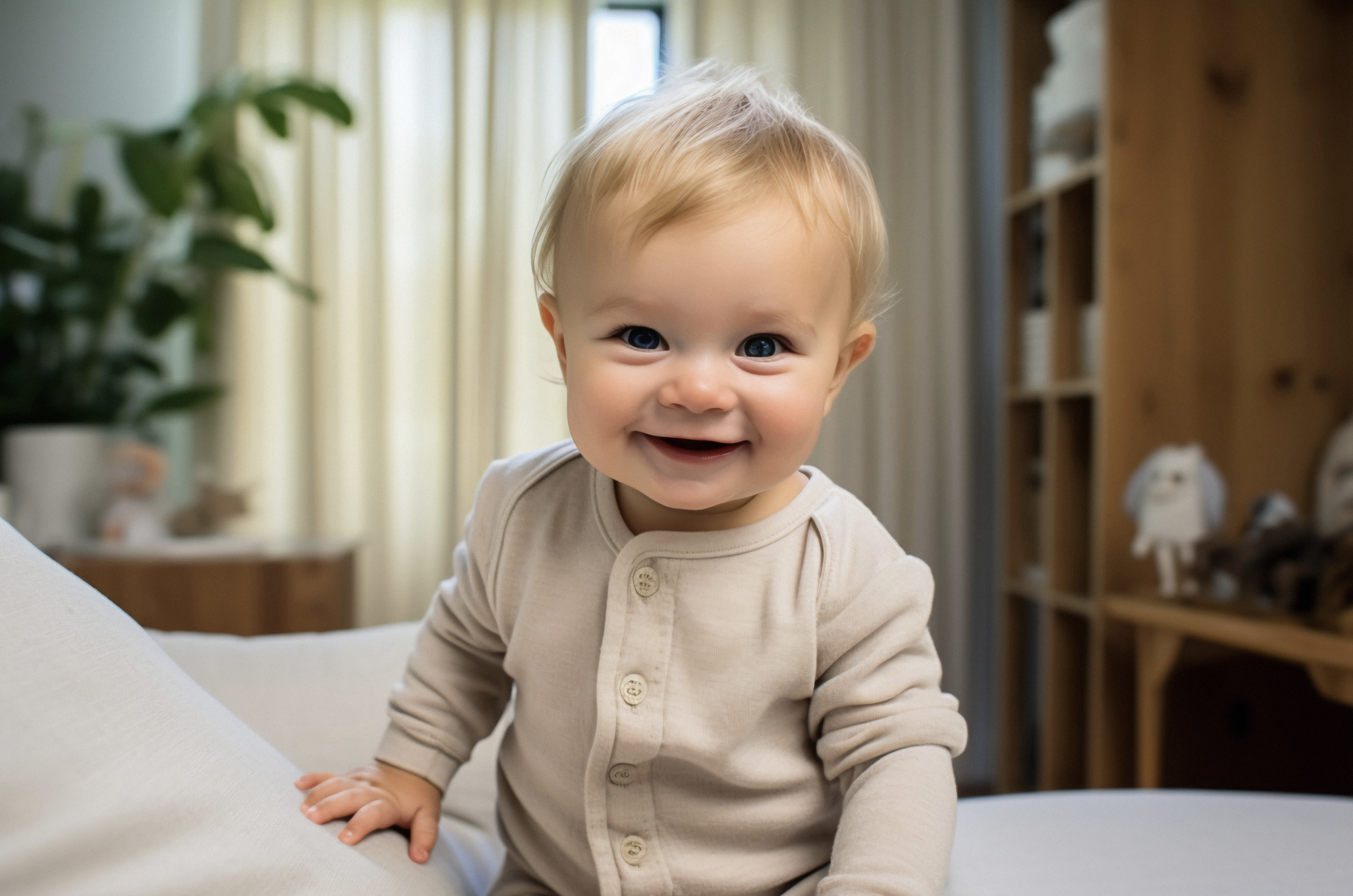
Turning one is that tender in-between — still small enough to melt into your arms, already brave enough to shuffle a step away. This is the season when the big 1-year milestones show up in full — the wobbly steps, the half-clear words, and that streak of independence that’s as thrilling as it is tiring.
This stage doesn’t change overnight — it’s more like a slow hand-off, babyhood quietly stretching into toddlerhood. A lot of the groundwork is already laid by 11 months, when your baby starts testing out standing and using simple gestures, and is continued into 13 months, when toddler confidence and curiosity kick in.
Every child moves at their own pace — some dash across the room, others stick to cruising along the couch. Both are exactly as they should be. What matters is seeing how their progress ebbs and flows — always in its own rhythm.
This stage doesn’t change overnight — it’s more like a slow hand-off, babyhood quietly stretching into toddlerhood. A lot of the groundwork is already laid by 11 months, when your baby starts testing out standing and using simple gestures, and is continued into 13 months, when toddler confidence and curiosity kick in.
Every child moves at their own pace — some dash across the room, others stick to cruising along the couch. Both are exactly as they should be. What matters is seeing how their progress ebbs and flows — always in its own rhythm.
Why 12 months is a milestone moment
At this age, movement changes everything — one minute they’re pulling up, the next they’re reaching for things you swore were safe on the shelf. Many one-year-olds are trying to stand alone or take tentative steps, while others are happily cruising along furniture. Tiny hands are endlessly busy — pinching at crumbs, banging blocks in triumph, or leaving wobbly marks on a page.
A first birthday may come with balloons and cake, but the bigger story is how your baby is already leaning into toddlerhood. They’re not just photo-ops — they’re real shifts in how your baby moves, babbles, and connects with you.
Language slips in quietly — a ‘mama’ one day, a wave the next — until you realize just how much they’ve been soaking up. Your little one might manage a clear word or two, yet what’s truly striking is how much they already grasp — from following simple directions to recognizing names and picking up on gestures like a wave or a point.
Socially, the first birthday brings drama and delight — a sudden attachment to a stuffed animal, a clingier hug when you leave, or a proud grin when they toddle into the room. Many one-year-olds develop a favorite toy or comfort object.
Some may cling a little tighter to parents, while others beam at the chance to explore. That pull between daring to explore and running back for comfort is what makes this age so endearing.
11 month baby milestones — what comes just before
Life with an 11-month-old feels like the warm-up act: skills appear, disappear, then come back stronger — as if your baby is testing the script before the big premiere. Many babies are on the move in their own style — crawling, scooting, or pulling up to cruise proudly along the sofa. Little hands get busier, pinching snacks, clapping blocks, or joyfully tipping toys out of boxes.
Babies at this age start communicating more freely — in their own way, but often clearly enough to understand. A wave might mean “bye-bye,” a nod signals yes, and a head shake means “no, I don’t want that.” Don’t expect reasoned arguments just yet — gestures will only take you so far.
12-month baby milestones — key first-year achievements
A first birthday is more than just a date on the calendar — it’s a wave of changes that can feel as if they’ve arrived all at once. Parents often connect this stage with the “big firsts” — first steps, first words, new social skills — and that’s true.
Just as important, though, are the quieter shifts happening beneath the surface: growing coordination and agility, the beginnings of self-feeding, and the early sparks of emotional intelligence.
Motor skills: the first steps toward independence
One of the most celebrated walking milestones for a baby at 1 year is, of course, those first wobbly steps. Some children are already toddling with confidence at twelve months, while others are still cruising or standing independently for a few seconds at a time. Be sure, both are completely normal — the walking window ranges widely from 10 to 18 months.
Alongside walking, you may notice your child squatting to pick up toys, climbing onto low furniture, or using push toys to test balance. Fine motor skills sharpen, making it easier to pick up finger foods, scoop with a spoon, or sip from a cup with a little help.
Speech milestones: first words and growing comprehension
For many families, speech milestones at 1-year-old include hearing a recognizable “mama” or “dada” used with intent. Some add a word or two, while others keep up a lively babble that already carries the rhythm of conversation. What really counts is that your baby is playing with sounds and gestures and showing you they understand more each day.
Right now, comprehension runs ahead — they know more than they can say. A one-year-old may follow a simple direction like “give me the ball,” or look toward a familiar object when you name it. Gestures such as waving, pointing, or shaking the head add richness to communication before words take over.
Social and emotional growth: stepping into toddlerhood
At 12 months, children often display stronger attachments and a more vivid sense of the world around them. Peek-a-boo may give way to more complex games, like handing toys back and forth. By now, babies know things still exist even when hidden.
It’s also common to see signs of separation anxiety in 1-year-olds. Your baby now understands that you exist even when you’re out of sight, which makes goodbyes harder. Your baby might protest when you step out of sight or tuck themselves shyly into your shoulder around new people. It can be tough at the moment, but separation anxiety is proof your baby knows you’re their safe place.
One-year-olds often swing between clinging close and dashing off with bold laughter — a constant dance between safety and adventure. A favorite blanket or toy often steps in as a sidekick, helping them feel secure as they face big new changes.
Feeding and growth: moving toward toddler eating
After the first birthday, little ones start acting differently at the table — more aware, more grown-up. Yes, breast milk or formula are still part of their diet, but by now your baby is eagerly trying solid foods and all sorts of purées, from vegetables to fruits.
Bottles are gradually phased out in favor of cups, and finger foods become a mainstay as toddlers enjoy feeding themselves. Appetite may dip compared to the rapid first-year growth, but that’s expected — the body is slowing down after tripling its birth weight and stretching upward by about 10 inches in twelve months.
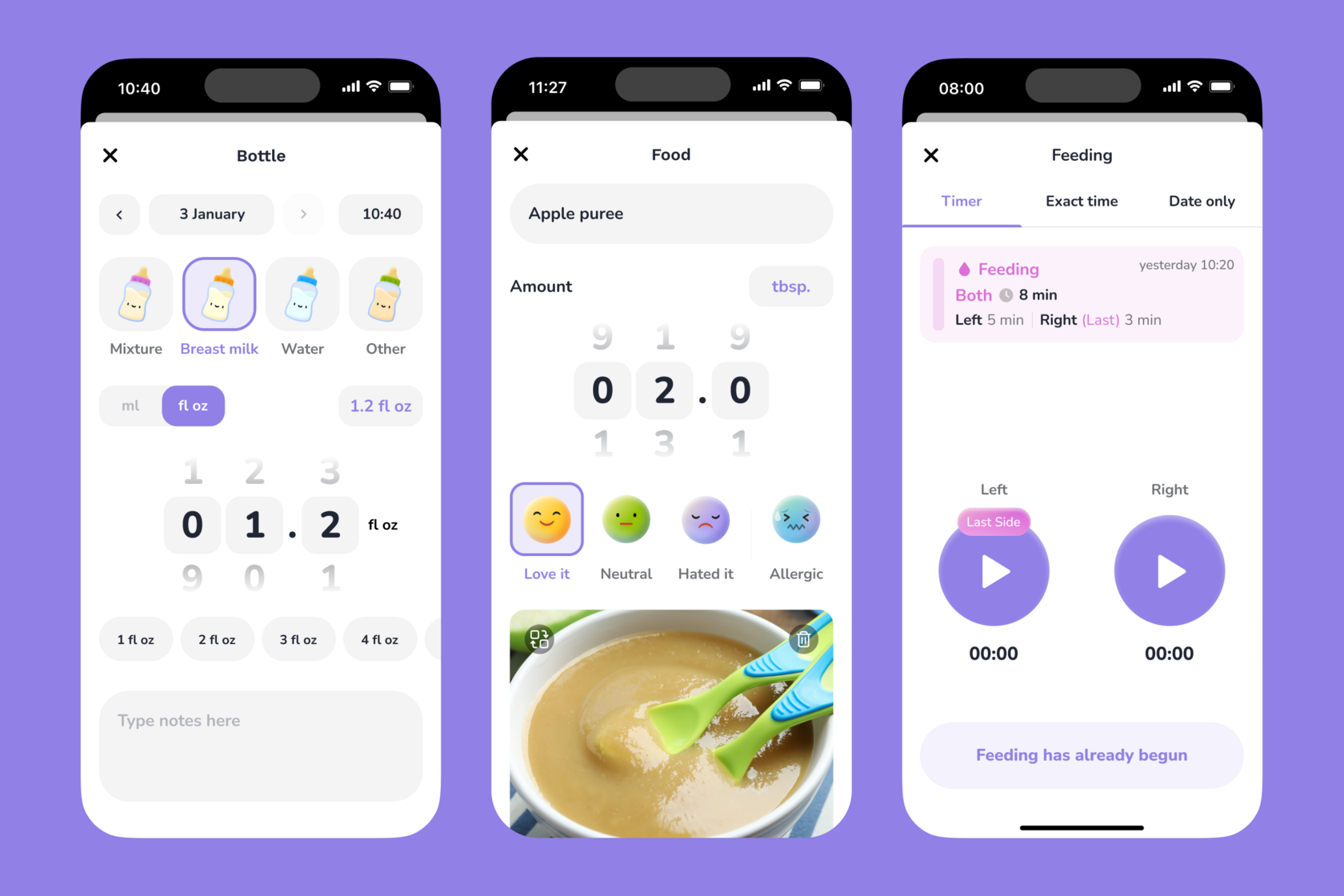
With the AYA tracker, you can log how much your baby eats, compare intake from day to day, note favorite foods and preferences, track possible reactions, and share these insights with your pediatrician.
13-Month baby milestones — toddlerhood begins in small steps
The skills your baby gained at 12 months keep building, and by 13 months they can feel like a whole new child — more capable and more developed, even if a month seems like nothing to us adults. Around this age, little ones often turn a bit mischievous — a good sign that their emotions and personalities are becoming more complex.
Language arrives in bits and pieces. One child may say a clear word or two, another may still be babbling with the rhythm of conversation. Gestures — pointing, clapping, raising arms to be held — fill the gap while words are still finding their way.
Some little ones are already stomping around on their feet at this age, while others are still crawling — and that’s perfectly fine. Crawling is an important stage, and there’s no need to rush walking if your baby hasn’t spent at least a couple of months on all fours. The urge to climb onto surfaces and discover what’s up above also grows stronger now.
From blocks to crayons: fine motor skills at 13 months
Our hands are never bored — this could be the motto of a 13-month-old. They love stacking blocks and knocking them down with equal delight, scribbling with crayons (sometimes smudging them across the paper), and trying out paints (just keep an eye so the taste-test doesn’t happen).
Mealtimes bring their own experiments too — this is when your little one is ready to sample just about anything you offer on the plate.
And then come the feelings. Affection blossoms in cuddles, hugs, and sloppy kisses, but so do the first toddler tantrums. Testing limits, wanting independence, yet still needing reassurance — this mix of bold exploration and big emotions is exactly what makes 13 months so unforgettable.
Sleep needs around the first birthday
A typical 12-month sleep schedule still includes two naps: usually one in the morning and one in the afternoon, with wake windows of around 3 to 4 hours in between. By the time toddlers reach 13 months, some will start showing signs that a nap transition is on the horizon — resisting the second nap, waking in the night, or struggling to fall asleep at bedtime.
But most children aren’t quite ready to fully drop to one nap until closer to 14–18 months. Moving too soon often backfires, leaving toddlers overtired. Another reality around this stage is sleep disruptions. A newly learned skill — standing, cruising, or even walking — can make rest tricky.
Developmental leaps, teething, or illness may also stir things up. For families navigating this, it helps to remember that regressions are temporary. With consistency and gentle reassurance, sleep usually settles again once the excitement of new abilities blends into the daily routine.
Red flags to watch for at 1 year
No two babies follow the exact same timeline. Some sprint ahead in one area while taking their time in another — and both can be perfectly healthy. That said, it helps to know the red flags for 1-year-old development, so you can notice early if a little extra support might be useful.
They’re not reasons to panic, but gentle signs worth mentioning at your child’s next checkup — or sooner, if your gut tells you something’s off. According to common pediatric milestone checklists, signs to watch for at 12 months include:
- Not showing interest in crawling, pulling up, or putting weight on their legs with a little help.
- Still unable to sit on their own.
- Not using gestures such as waving, pointing, or shaking their head.
- Not babbling or trying sounds like ‘mama’ or ‘dada.’
- Not turning to their name or following your point.
- Showing little interest in familiar people or simple interactive games.
- Not passing toys or objects from one hand to the other.
- Losing skills they had already learned.
Missing one milestone on its own rarely signals a problem — what matters is the bigger picture. What matters most is the overall pattern of growth. If your child is falling behind in several areas at once — movement, language, social play — it’s worth checking in with your pediatrician.
Early support, when needed, can make a big difference. And even if everything looks typical, speaking up gives you comfort and helps your pediatrician follow your child’s growth more closely.
How parents can support development at 11–13 months
This stage is full of firsts, but they don’t just appear out of nowhere. They grow quietly out of daily rituals — the way you play, the way you comfort, the way you show up. They grow out of daily routines, playful experiments, and your steady presence.
Often the best support for 1-year-old development looks simple: space to move, a stream of words to soak in, and your encouragement as they try, wobble, and try again. At this age, movement calls the shots. Some days it’s crawling, others it’s pulling up, and then — suddenly — the first steps.
A cleared hallway, a set of soft cushions, or a sturdy push toy can become a playground where balance grows and strength sneaks in without anyone noticing.
Language sneaks in quietly, tucked into the everyday. Talking as you go about your day — naming objects, describing what you’re doing, responding to your child’s babbles — teaches just as much as a bedtime story. Before long, the daily chatter starts to sound like its own kind of book.
Play is where most of the learning hides — whether they’re toppling blocks, dumping toys out of a box, or dragging a crayon across paper. Even meals and clean-up turn into practice sessions. Letting your baby try finger foods, fumble with a spoon, or “help” put away toys is often messy, usually slow, sometimes hilarious — but every attempt makes them a bit more independent.
And then there’s the back-and-forth between needing your arms and wanting their freedom. At this age, children may cling to you one moment and push away the next. Meeting both needs — offering a cuddle when they’re anxious, freedom when they’re brave — helps them feel safe enough to edge a little farther into the world.